The R.B. Stewart Way
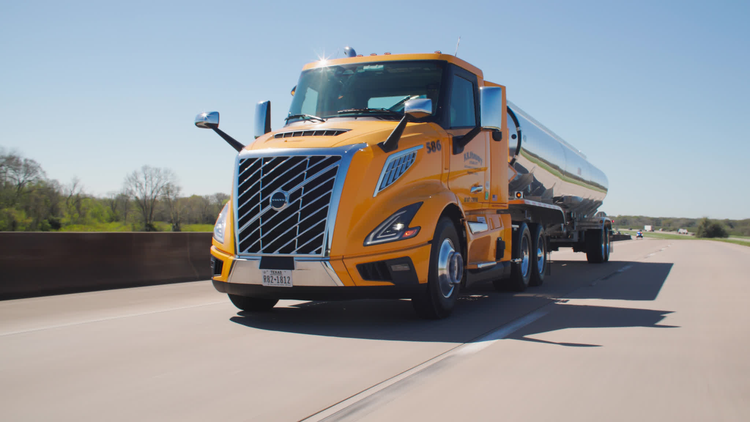
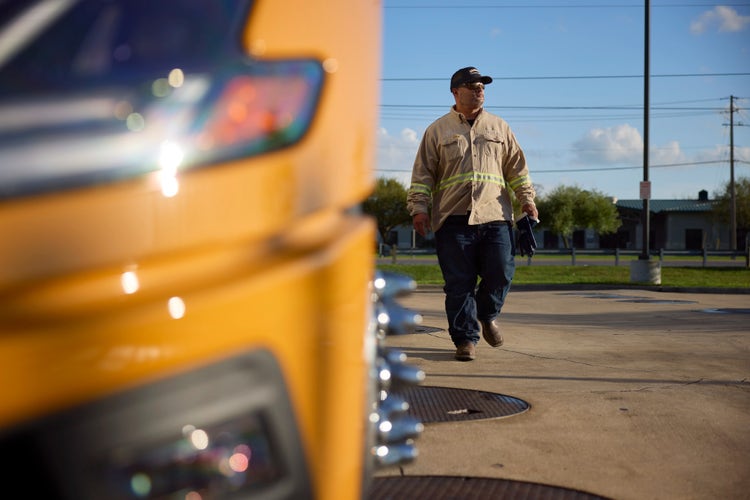
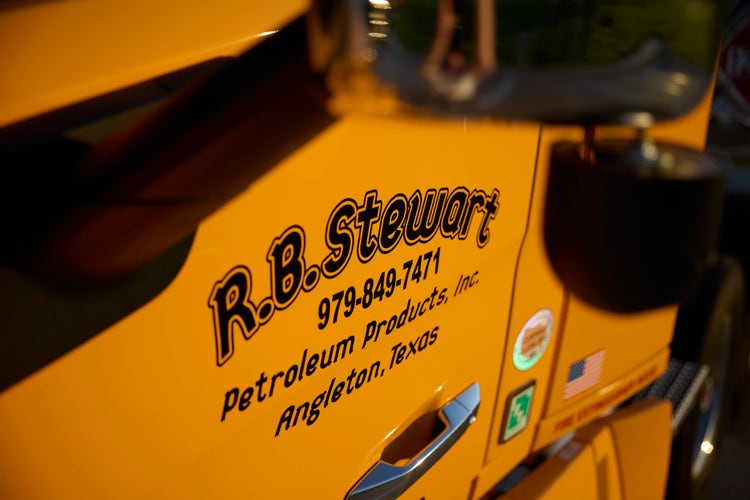
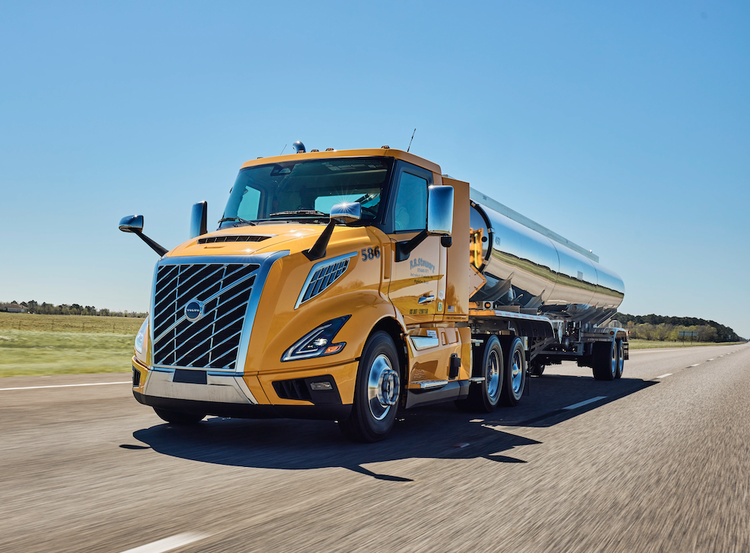
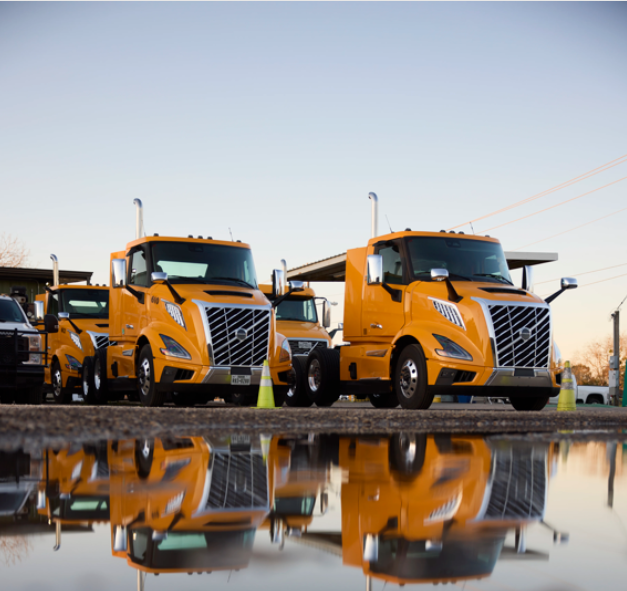
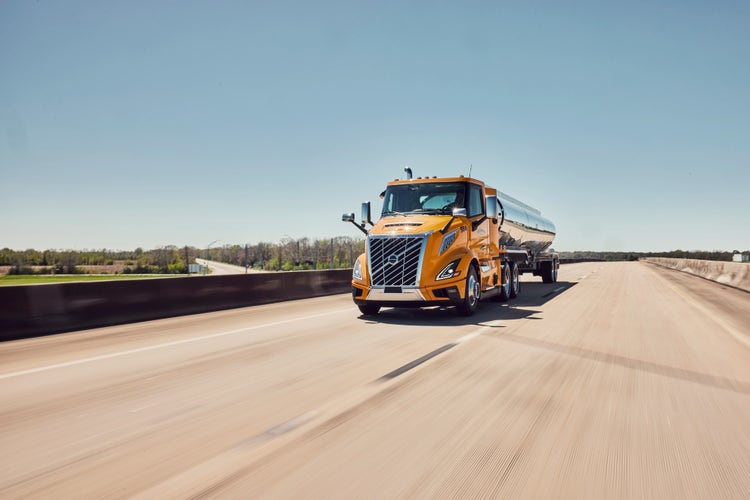
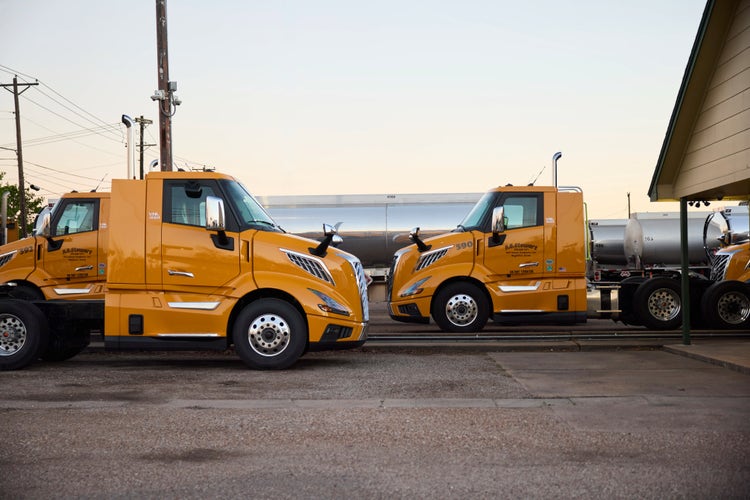
The sun is barely up in Angleton as Terry Tesch walks the facility this morning. The yard is already busy as they prepare for another warm, South Texas day. Tesch is president at R.B. Stewart Petroleum Products and he’s doing a quick check in with drivers, technicians and other team members. They’re preparing a fleet of yellow VNL 300 day cabs to deliver gas and diesel to convenience stores across the region.
“When I got here in 2012 it was a fleet of just 14 trucks,” says Tesch. “Thanks to this team, we’ve been able to do some amazing things.”
What began as a small, family-run Texaco consignee in Brazoria County nearly a century ago, has evolved into a multi-state operation moving refined fuel across the southeastern United States. Today, R.B. Stewart operates a fleet of 175 trucks with approximately 240 drivers, delivering more than 100,000 loads of fuel annually.
That scale is impressive. But for President Terry Tesch, it’s not the headline.
“Our fleet delivers a load of fuel somewhere in the United States about every five minutes.”
“We like to say our fleet delivers a load of fuel somewhere in the United States about every five minutes,” Tesch explains. “That’s a pretty significant volume when you think about it.”
What matters more, he says, is how that work gets done. They’ve quietly built a company where growth hasn’t come at the expense of culture, a rarity in the fuel transport business.
Built on safety, proven on the road
At the core of the company is what Tesch calls The R.B. Stewart Way. It’s not a slogan. It’s a framework for how the business operates. You can see it in everything from leadership decisions to driver interactions, and down to the way trucks are spec’d and maintained.
“We really do focus on our culture,” Tesch says. “We try to make our drivers feel like they’re part of the organization, not separate from it.”
That distinction matters in an industry where drivers can often feel disconnected from the companies they represent. At R.B. Stewart, the goal is the opposite: eliminate silos, create access, and build a shared sense of responsibility.
“Getting one percent better every day. That mindset applies to everything we do.”
That philosophy extends beyond communication. It shapes hiring, training, and retention. It’s one reason the company has been able to grow not just in size, but in professionalism.
“We talk a lot about continuous improvement,” says Justin Frey, director of operations. “Getting one percent better every day. That mindset applies to everything we do.”
And nowhere is that mindset more visible than in the company’s approach to safety.
Safety as a standard
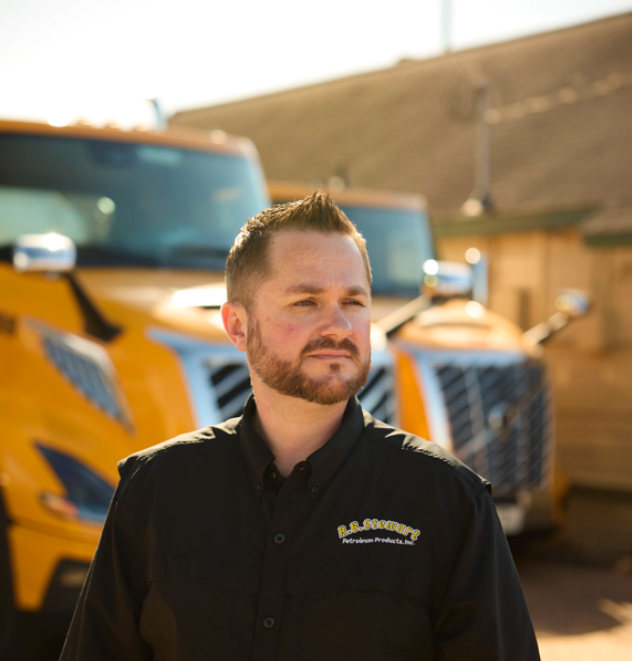
R.B. Stewart hauls refined petroleum products: gasoline, diesel, and other volatile materials that require careful handling and constant attention. The risks are real, and the margin for error is slim.
“We’re not hauling milk, we’re hauling something volatile. You’ve got to do it safely.”
“We’re not hauling milk,” Frey says plainly. “We’re hauling something volatile. You’ve got to do it safely.”
That reality shapes every aspect of the operation. From compliance with hazmat regulations to driver training to route planning, safety is built into the process. But at R.B. Stewart, it goes further than that.
“There’s nothing more important,” Tesch says. “I have no greater responsibility than making sure our people get home safely every night.”
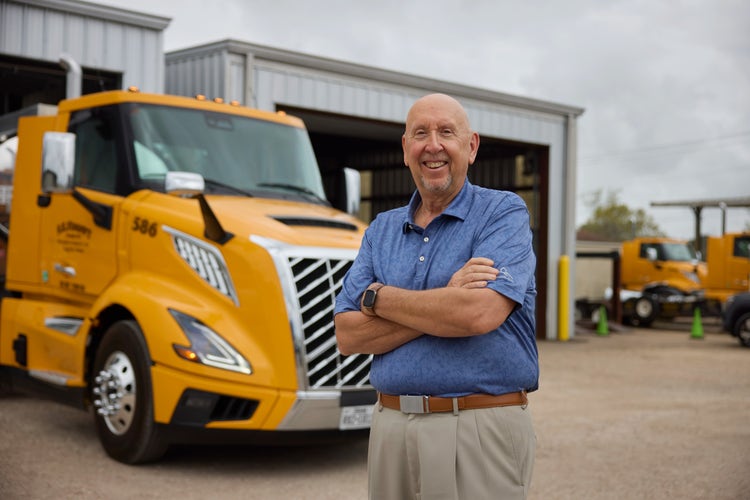
“I have no greater responsibility than making sure our people get home safely every night.”
That responsibility shows up in measurable ways. The company has earned industry recognition for its safety performance, including being named a class winner in the National Tank Truck Carriers’ prestigious safety awards program.
For Tesch, that recognition is important. “It shows that we’re not taking shortcuts,” he says. “That we’re doing the right things day in and day out.”
It also reinforces the idea that safety, when done right, becomes a competitive advantage.
Backing it up: Equipment, maintenance, and trust
A strong safety culture starts with people, but it’s sustained by the tools those people rely on every day.
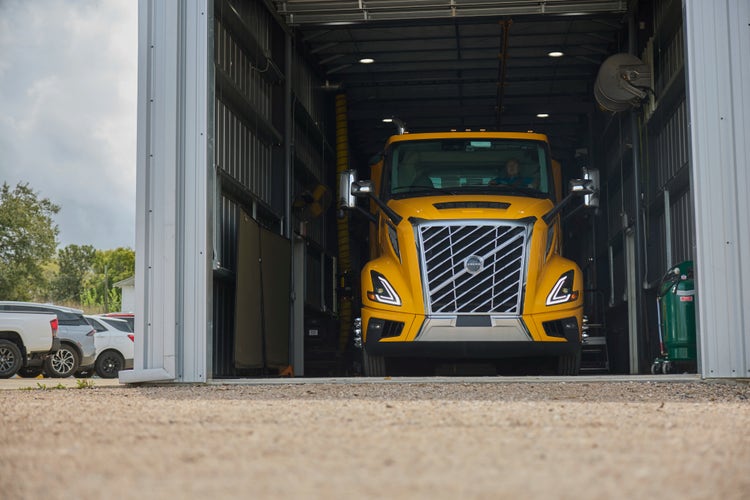
For Bryan Elsberry, director of maintenance, that responsibility is personal. “We take it seriously. We want to provide the safest piece of equipment for our drivers. We want them to go home safely every day.”
That commitment is reflected in how the fleet is maintained and supported. That’s achieved with highly trained technicians both in their shops and on mobile units positioned across key regions.
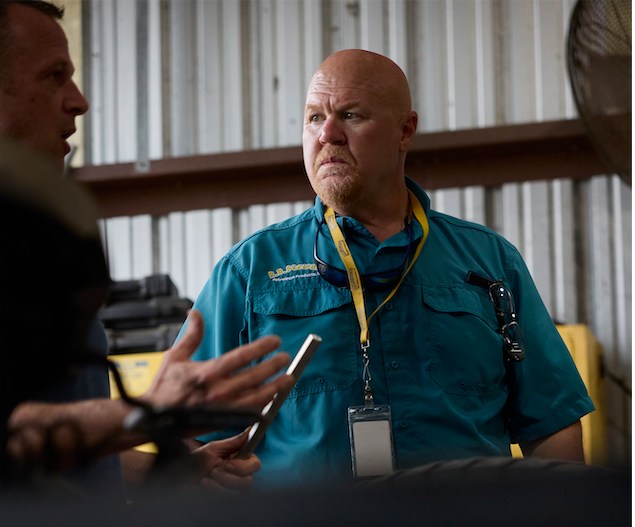
“We take it seriously. We want to provide the safest piece of equipment for our drivers. We want them to go home safely every day.”
“It gives the driver a lot of confidence,” Elsberry explains. “They know they can go out and perform their job without worrying about the equipment.”
That confidence is critical not just for performance, but for safety. When drivers trust their equipment, they can focus on the road, the environment, and the task at hand.
And in today’s driving conditions, that focus is more important than ever.
A changing road
Modern trucking environments are more complex than they’ve ever been. Increased traffic, distracted drivers, and tighter delivery windows all contribute to a more challenging operating landscape.
“We’re dealing with more vehicles on the road, more distractions,” Tesch says. “We have to train our people to handle that, but we also have to give them tools to deal with it.”
That philosophy of combining training with technology has guided R.B. Stewart’s long-standing partnership with Volvo Trucks.
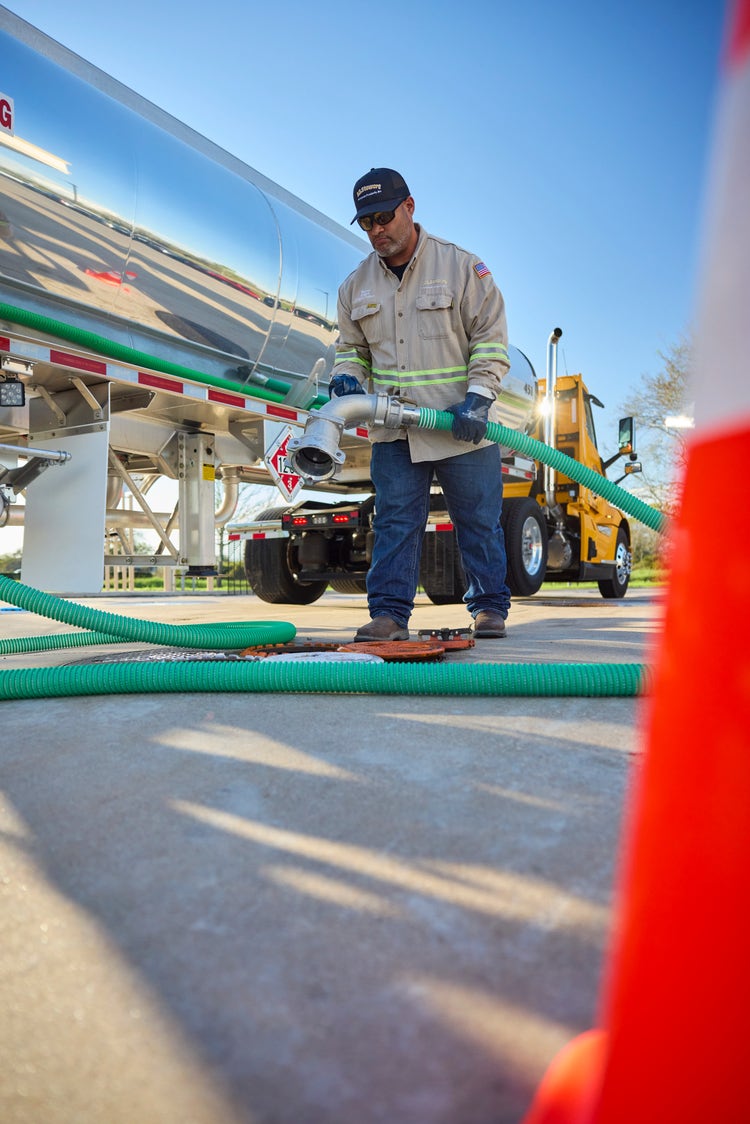
“We have to train our people to handle that, but we also have to give them tools to deal with it.”
The company began exploring Volvo trucks more than a decade ago, eventually transitioning to a fully Volvo fleet. The decision wasn’t based on a single factor, but safety played a central role.
Today, that partnership is most visible in the company’s adoption of the new Volvo VNL.
“We’re not going to scrimp when it comes to safety,” Tesch says. “I need to give the team all the tools to help them”
That includes advanced driver assistance systems and a range of features designed to support the driver in real-world conditions.
“Volvo Active Driver Assist, adaptive cruise control, lane departure systems. Those are all important to us,” Frey says. “They help us back up our safety culture with real capabilities.”
https://www.volvotrucks.us/-vnl/Videos/volvo-active-driver-assist.mp4
Forward Collision Warning with Emergency Braking
https://www.volvotrucks.us/-vnl/Videos/volvo-active-driver-assist-plus.mp4
Lane Keep Assist with Centering
“Eighty percent of our miles are urban miles, meaning we're driving in traffic like Houston, Dallas, San Antonio, Denver,” according to Tesch. “Those safety features allow us to have a backstop. They're never a replacement for a highly qualified, well-trained driver. The safety technology can be an insurance policy that helps our drivers get out of situations surrounding vehicles put them in.”
But technology alone isn’t the story. It’s how that technology integrates into the driver’s experience.
Comfort, confidence, and control
Long hours behind the wheel take a toll physically and mentally. Fatigue remains one of the industry’s biggest challenges and it has a direct impact on safety.
“Driver fatigue is a real issue,” Frey says. “Anything you can do to reduce that makes a difference.”
For R.B. Stewart, that’s where comfort becomes more than a convenience. The drivers notice the difference immediately.
“From the seating to how quiet the cab is to how it rides, it’s just an amazing truck,” says Felix Rivera, Senior Driver Trainer.
“The drivers tell us these trucks are smoother. They’re quieter,” Frey explains. “At the end of the day, you’re not as worn out. And that matters.”
“They put you in the best,” Rivera says. “That shows you the company’s commitment to the drivers.”
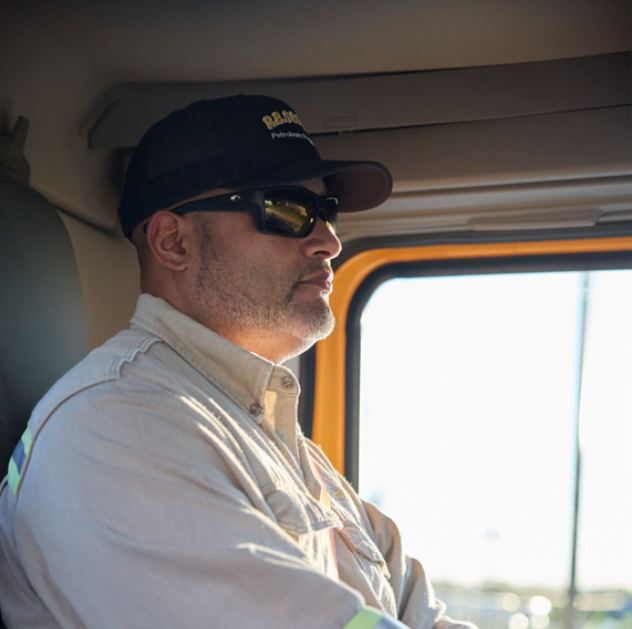
“They put you in the best, that shows you the company’s commitment to the drivers.”
When It Matters Most
The true test of any safety system isn’t how it performs under ideal conditions. It’s how it responds when something goes wrong. For R.B. Stewart, that test came in the form of a serious accident in 2025.
“We were involved in a head-on collision,” Tesch recalls. “It was unpreventable. An intoxicated driver crossed the center line and hit us head on.”
What happened next reinforced everything the company believed about its approach.
“After inspecting the truck, it could have been much worse,” Elsberry says. “I truly believe the design of the truck made the difference.”
“We’ve known our Volvos are designed to have the engine drop down underneath the driver's compartment in a head on collision. And of course, we’ve discussed the benefits of having an all steel cab and the energy absorption that can provide,” shares Tesch. “But you have a new appreciation once it happens and you see firsthand how that truck responded to the impact. To see that the engine did drop down. Our driver walked away with zero injuries, and we attribute a lot of that to the truck he was in.”
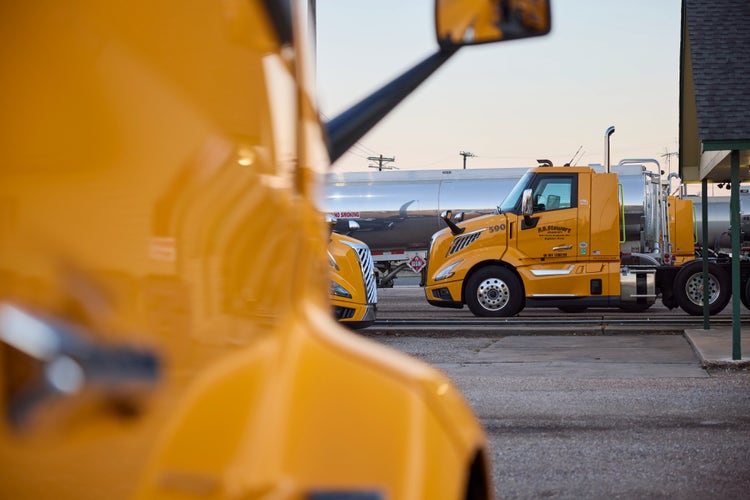
“Our driver walked away with zero injuries, and we attribute a lot of that to the truck he was in.”
Toward the future
As R.B. Stewart continues to expand into new markets, the foundation remains unchanged. They continue to follow simple, proven philosophies.
“We're trying to challenge each other to just get one percent better every day,” says Tesch.
“That can be in how we talk to our people, how we manage our capital, how we do our safety training, or how we approach relationships with our customers and vendors. If we can be just one percent better tomorrow, we'll be successful.”
“If we can be just one percent better tomorrow, we'll be successful.”
On roads where the stakes are high and the margins are thin, following The R.B. Stewart Way continues to make the difference.