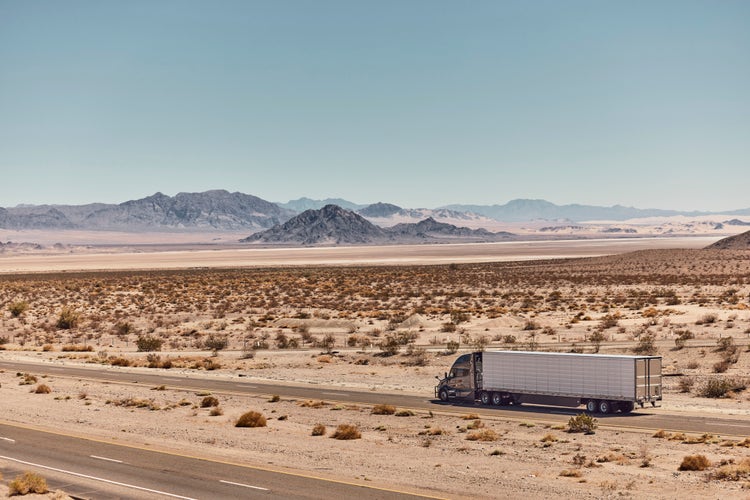
How the all-new Volvo VNL proves its strength in the desert heat.
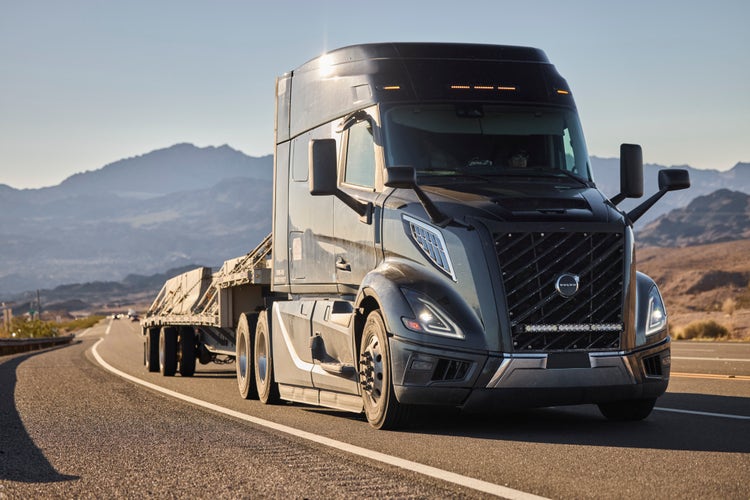
In the deserts of the American Southwest, where asphalt temperatures can reach 150°F, Volvo Trucks pushes the all-new VNL to its absolute limits, aiming to prove that quality holds up even under some of the hottest conditions on the planet.
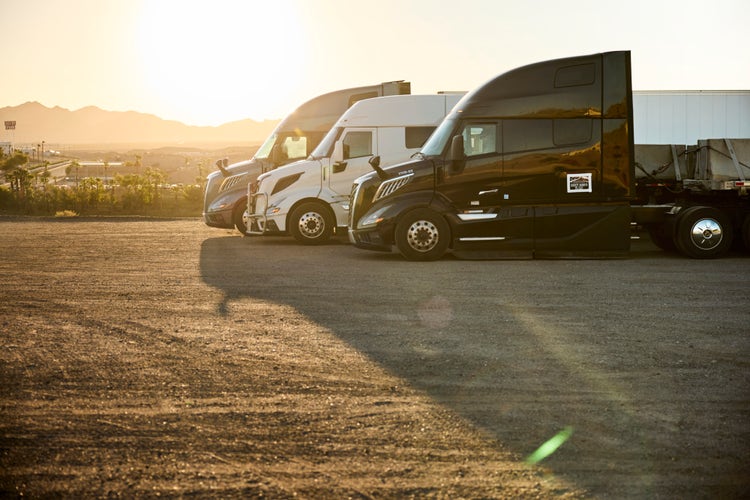
A recipe for reliability
- Take one all-new Volvo VNL, fully loaded at 78,000-pounds.
- Add a dream team of reliability testers.
- Place in the searing, 120-degree oven of the Arizona desert.
- Bake for days on end, pushing further and harder than any customer ever would.
- The result is a truck that can be trusted in the most grueling conditions.
In the relentless heat of Bullhead City, Arizona, and into Nevada’s and California’s hot zones, we welcome you to Volvo Trucks’ Hot Weather Reliability Testing program.
This is the third season of hot-weather testing for the all-new VNL, where a test team operates in temperatures ranging from 90 to 120 degrees Fahrenheit. They run a punishing schedule of stop-and-go traffic, highway cruising, and, most importantly, grueling grades of 5-7%.
“Reliability testing in hot environments is just one part of a much larger program,” explains Matthew Taylor, Group Manager for Reliability Test Engineering at Volvo Group North America. “But it’s one of the most important.”
"It really does give us a chance to run the truck as a customer would, and maybe a little bit more extreme than a customer might, all to ensure that its systems are performing optimally,” adds Taylor.
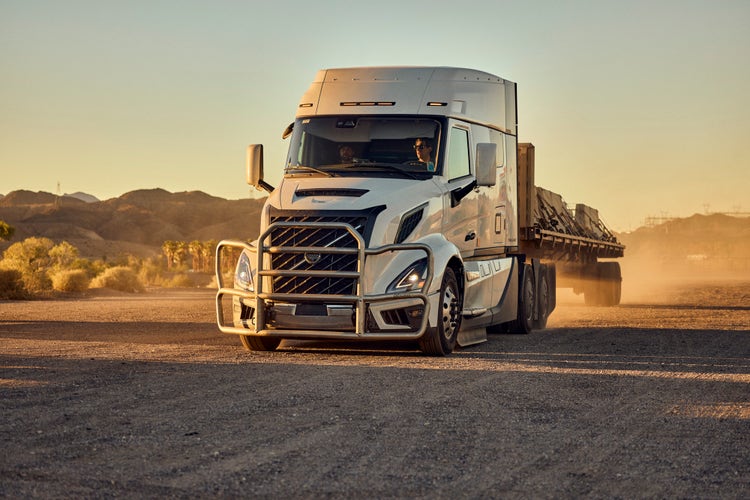

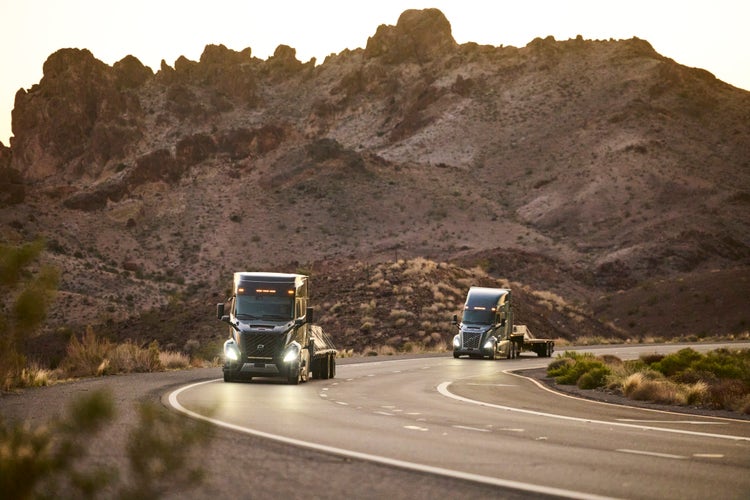
“Reliability testing in hot environments is just one part of a much larger program, but it’s one of the most important.”
The hot soak
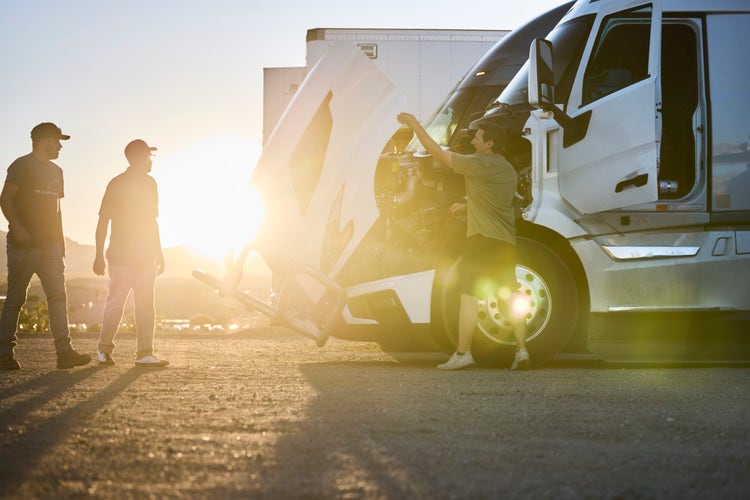
At the heart of the testing program lies one of the most demanding procedures: the hot shutdown. Dan Stathis, a Field Test Engineer for Volvo, describes what happens at the top of Union Pass after climbing through triple-digit temperatures.
"Once we get to the top, we do what we call a hot shutdown. We shut the engine off and let the engine hot soak," Stathis says. "In those situations, the engine is under extreme duress. Coolant pressure rises, and one goal for us as field testers is to make sure we don't blow a radiator hose or burst a radiator in these conditions. We look at everything from coolant and turbo temperatures to transmission and axle temps, ensuring every system performs within design limits.”
After that immense climb, the engine compartment becomes an oven, temperatures saturating every component. The team monitors everything through laptops, watching coolant temperatures rise anywhere from 15 to 40 degrees Fahrenheit.
“Once we see the coolant temperature level off, that's usually when we end our shut down and we'll start the engine,” adds Stathis. “And at that point, we're looking to make sure that our coolant oil temperatures actually start to fall within the operating temperature of the engine.”
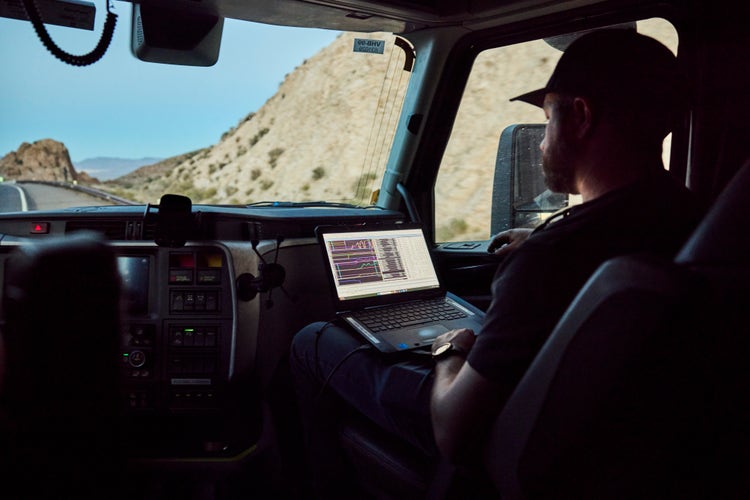
“One goal for us as field testers is to make sure we don't blow a radiator hose or burst a radiator in these conditions.”
The feedback loop
What sets Volvo Trucks apart is the constant two-way communication between the test teams in the field and engineers back at headquarters.
“We log every concern in what we call a product issue log, so it gets to the right engineer quickly,” Stathis explains. “They’ll send us instructions—maybe add a thermocouple in a certain spot, or try a hill climb in a different gear. Sometimes they ship prototype parts for us to swap in and rerun the test. The improvement cycle is immediate.”
Chris Green, a Volvo Trucks Test Driver, knows the process well. “We’re not just driving to drive,” he says. “We listen to the engine, we monitor the instruments, and we report back anything unusual. That feedback goes straight to the engineers. I take that responsibility seriously. This is a big piece of equipment, and our job is to make sure it’s ready for the real world.”
That responsiveness builds confidence for drivers like Green. “What performs the best to me is the HVAC system,” he says. “And the parking cooler means I don’t have to sit and bake during a layover. Overall, I feel confident. I know the truck won’t overheat, and I know it’s reliable. That gives you great peace of mind.”

“Overall, I feel confident. I know the truck won’t overheat, and I know it’s reliable. That gives you great peace of mind.”
Comfort under pressure
For all the focus on engines, radiators, and powertrain performance, one priority stands out: the driver. Volvo Trucks’ hot testing program pays an equal amount of attention to the cab, evaluating its ability to create a sanctuary from the harsh heat. For test driver Patricia Brass, the climate control is a standout feature.
"I wouldn't know if it was 120 degrees outside…everything is so comfortable,” Brass says. “I’ve driven just about everything in my career, and this is the best product I’ve ever been in. I feel spoiled.”
This comfort is no accident. The cab is heavily instrumented with thermocouples to measure the precise performance of the HVAC system. The team also rigorously tests the integrated Volvo Parking Cooler, which allows a driver to rest in a cool cab without idling the engine.
"We can have the driver hotel in the truck overnight," Matthew Taylor notes. "As the sun starts coming up and the temperatures start rising inside the cab, the driver can evaluate how the parking cooler is going to come on and keep that cab at a comfortable temperature."
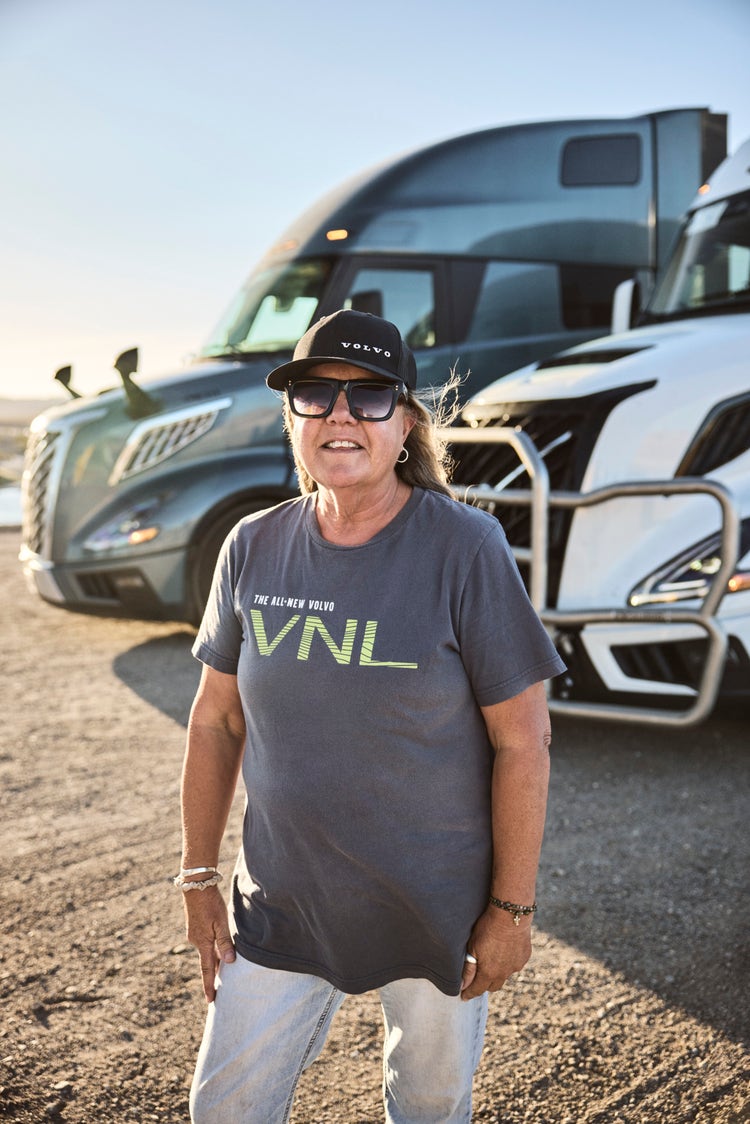

“I wouldn't know if it was 120 degrees outside…everything is so comfortable.”
— Patricia Brass, Volvo Trucks test truck driver
Proven by real-world performance
“Volvo does a wonderful job in the lab,” Taylor says. “But you can’t replicate a 150-degree blacktop surface with a chamber. You can’t capture the convective heat radiating into the underside of a truck. You need to be here, in these conditions, running the routes real drivers run. That’s how we make sure we deliver reliability.”
After three seasons of hot weather testing, the results speak for themselves. "We haven't had a boot pop off. We haven't had a radiator failure. No coolant leaks," Taylor reports.
Thousands of miles and countless hot shutdowns later, one thing is clear. The new VNL is built to last. “Customers can trust the all new VNL no matter where they take it, or where it takes them,” adds Taylor.
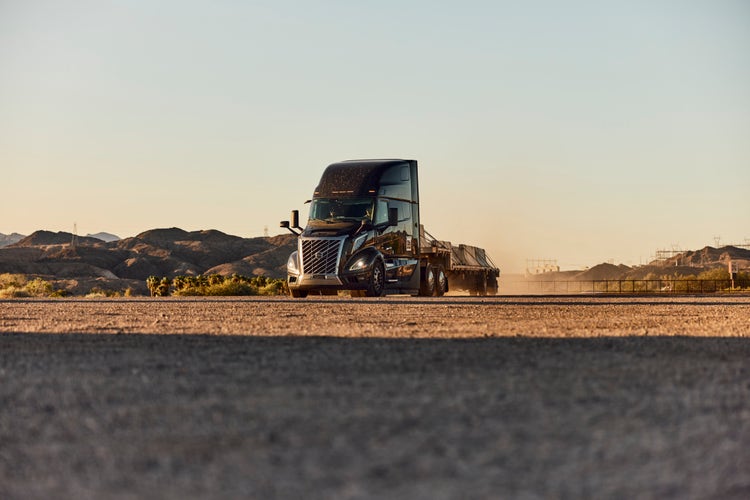
If you can’t stand the heat...
Having been tested from the bitter cold of Alaska to the immense heat of the desert, the VNL is ready for anything.
"We've pushed this truck to the extremes in our testing," Taylor affirms. "No matter where our customers are in North America, they can trust this truck to take them. They can trust the vehicle to shine."
As the sun sets over the Arizona desert and the pavement finally begins to cool, driver Chris Green says the heat and the work are all worth it, "I love being part of a team that's creating something for the future. This isn’t just about us. It’s about making sure that drivers and companies get the most reliable truck possible.”