Volvo Autonomous Solutions sees the true potential to move freight more safely, efficiently, and help address driver shortages and capacity challenges.
The hub-to-hub model
Volvo's approach to autonomous trucking isn’t about sending driverless trucks door-to-door. Instead, the company is focused on a hub-to-hub model.
Here’s how it works: A load is picked up by a human-driven truck from a customer location and delivered to a nearby autonomous hub located near a highway. At that hub, the trailer is switched onto an autonomous truck, which then drives the long-haul highway portion of the trip without human intervention. Upon arrival at another terminal near the destination, the process reverses and a human driver completes the final leg.
“It’s not as simple as just putting a robot into a truck and sending it off,” Sasko Cuklev, Head of On-Road Solutions at Volvo Autonomous Solutions explains. “There are many activities that a driver does today that are not only about driving. That includes inspections, fueling, reporting, different paperwork, and so on. We have to account for all of that.”
“It’s not as simple as just putting a robot into a truck and sending it off.”
Sasko Cuklev, Head of On-Road Solutions at Volvo Autonomous Soulutions

As an example of the process, each autonomous load receives a 120+ point inspection of the tractor and trailer prior to launch for the destination hub.
This transport as a service model, named Autona/freight, allows Volvo to focus autonomy on the more controlled and predictable highway environment. Autona/freight still relies on people for complex urban driving and logistics in the first and last haul miles.
Why Texas?
Volvo Autonomous Solutions chose Texas as its launchpad for several reasons: high freight volume, favorable weather, and a regulatory framework that allows autonomous trucking.
Customer demand plays a central role in route selection. “We always start with our customers and their input,” Cuklev says. “Then we look at whether the technology and regulations allow us to go there.”
“There’s a huge freight corridor in Texas with a lot of big cities, a lot of our customers present and driving there, and sunny weather most of the year,” says Cuklev. “Plus, the regulatory framework is friendly. We can drive autonomously in Texas today.”
Safety by design
No company is more synonymous with safety than Volvo and the company is doubling down on that reputation when it comes to autonomous operations.
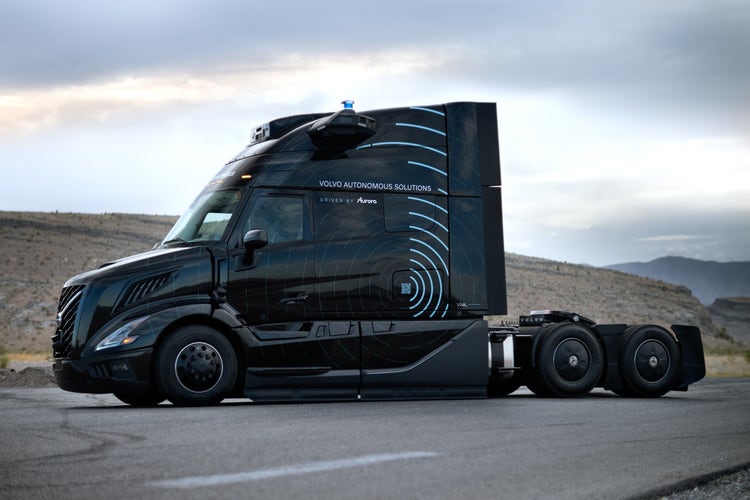
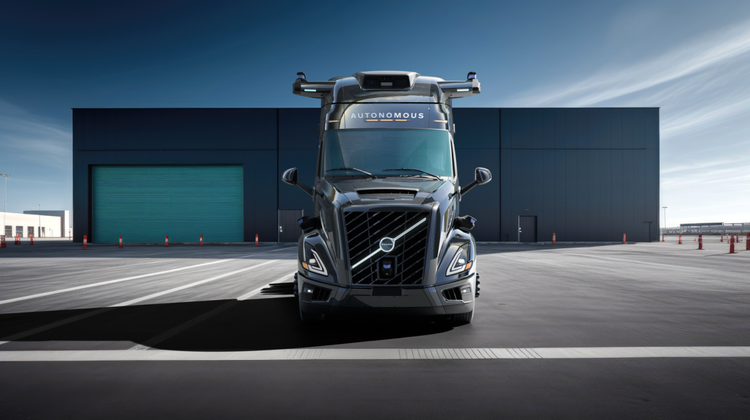
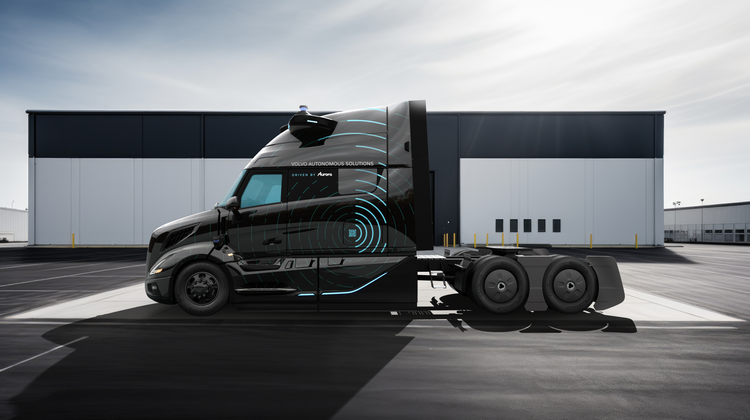
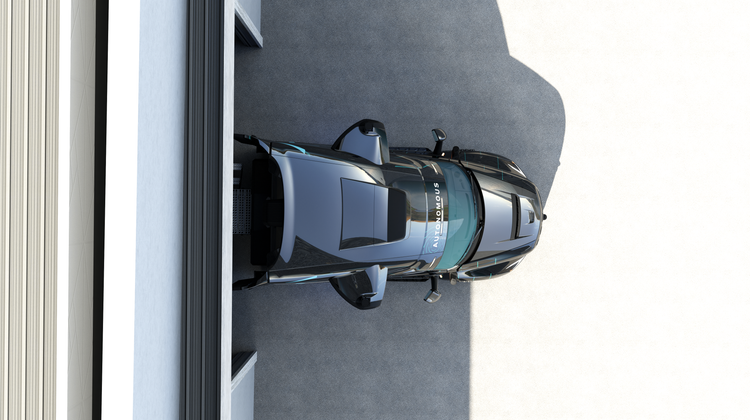
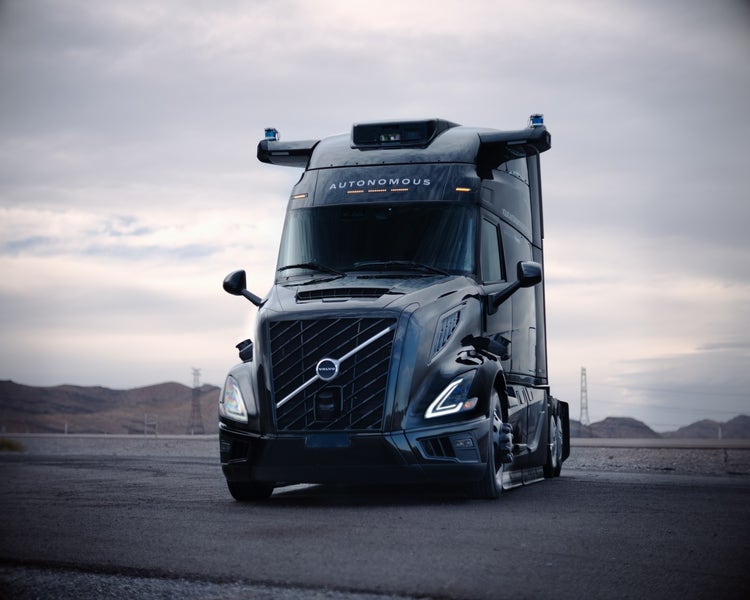
Volvo’s autonomous trucks are not retrofitted versions of standard vehicles. They are designed from the ground up with safety and scalability in mind. The Volvo VNL Autonomous is built on the newly redesigned Volvo VNL platform, launched in January 2024. This model represents a 90% redesign from the ground up, featuring significant improvements in fuel efficiency, aerodynamics, and safety, making it the ideal platform for autonomous operations.
The vehicles are built at the North American assembly facility in Dublin, Virginia. The manufacturing process will allow for scalable expansion in the future. Equipped with redundant safety-critical systems, the Volvo VNL Autonomous prioritizes safe operations without a human in the seat. The redundant systems include:
Redundant brakes
Independent channels for sending braking commands, each with its own power source, ensuring the truck can stop safely even in the event of a failure.
Redundant steering
Two fully duplicated steering systems, independently powered, allowing the truck to continue steering or safely stop if one system fails.
Redundant power and energy storage
Dual power sources, separated and distributed within the vehicle, ensure continuous operation of all safety-critical functions.
Redundant communication systems
Dual channels to maintain reliable data exchange with roadside infrastructure and other vehicles.
Redundant vehicle motion management
Duplicated coordination of all actuators and control systems to maintain precise and stable vehicle movement at all times.
Redundant lights
Even brake and hazard lights are partially duplicated, exceeding industry standards to support safe roadside signaling.
“If something fails, there’s always a backup. That’s essential for safety and for industrializing this at scale.”
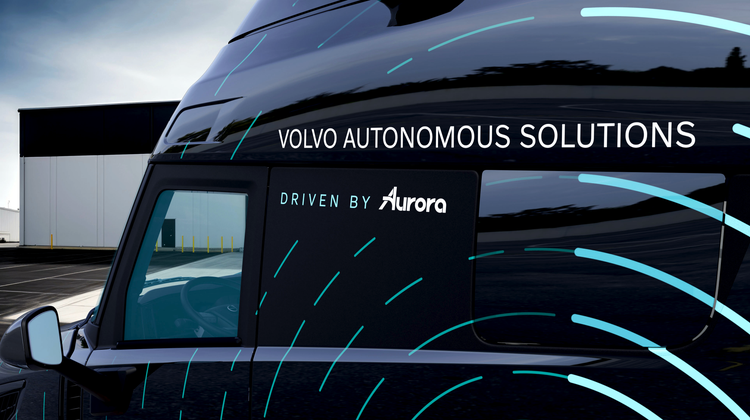
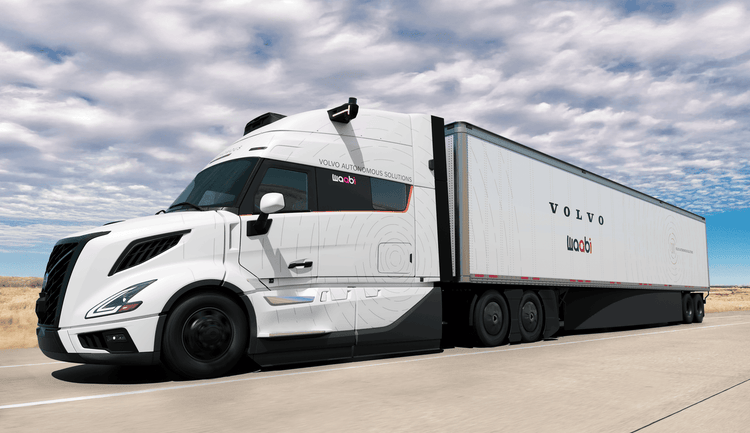
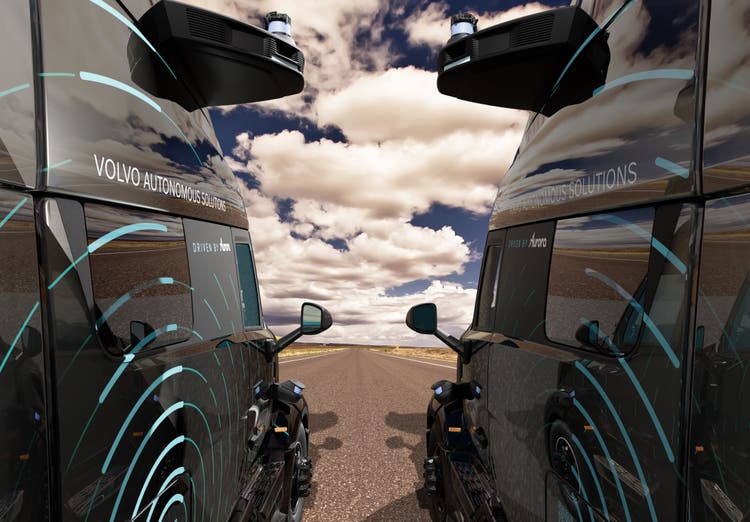
Volvo has also partnered with the Aurora and Waabi to deeply integrate their systems with the Volvo VNL Autonomous to create a safe and efficient solution for the US highway segment.
Familiar ground
The challenges of running an autonomous fleet are very similar to those that a traditional fleet faces. “The vision was laid out nearly three and a half years ago. We would start a manual trucking operation that's not autonomous, to get our operational footing right and to engage with customers,’ says Alan Oakley, head of operations for Volvo Autonomous Solutions. “We started trucking operation. We became very good at it. Our service levels are very high, our safety levels are very, very high.”
“If we move it safely, and we move it on time every time, then this is going to be successful.”
Oakley brings four decades of experience with dedicated contract carriers to his role at Volvo. While there are unique aspects to scheduling loads with autonomous drivers. Including that full inspection two hours before each load launches to its destination hub, the step-by-step approach to building their transportation as a service model is clearly working.
“With the experience from serving our customers with live drivers, we could move into the autonomous phase where we're actually running autonomous middle mile (with safety pilots). It just transitioned seamlessly because we simulated autonomous with our manual operation. So, when we did start our pilot phase, we were ready.” Oakley continues, “For my part of it's not about autonomous trucks, again it's about safety and service. If we move it safely, and we move it on time every time, then this is going to be successful.”
It takes an ecosystem
Building a safe, reliable autonomous trucking solution requires creating a fully functional ecosystem. That includes everything from digital systems for dispatching and tracking, to operational procedures for fueling and inspections, to roadside support when things go wrong.
“There’s a lot of hard work that goes into building the surrounding infrastructure,” Cuklev says. “We’re setting up operational staff, service networks, safety protocols, and digital tools. It’s not just the truck, it’s everything around it.”
Volvo has worked closely with its Texas dealerships, both the Bruckner and Vanguard networks, to establish service points along the initial routes.
The human role
Despite the high-tech nature of the solution, human workers remain a critical part of the operation.
“There’s definitely still a role for humans,” Cuklev emphasizes. From managing logistics and pre-trip inspections to servicing vehicles and providing remote oversight, many existing trucking jobs remain intact but reimagined.
Local driver roles are likely to increase with operators making multiple runs from hub to final destination, then returning home at the end of a shift. “As we’ve seen with automation in many industries, there is typically new job creation which supports it.
“We want our customers to feel safe, confident, and excited about this new chapter in freight transportation.”
For now, the autonomous trucks will only operate on highways. “They won’t be driving through cities or neighborhoods,” Cuklev confirms. “We’re not there yet in terms of technology or consumer readiness.”
What’s next?
Volvo Autonomous Solutions is steadily working toward removing the safety driver from its autonomous trucks, which is a major milestone in proving full autonomy. Most of the surrounding infrastructure is already in place, from service networks to operational procedures. Initial autonomous runs serving DHL are already underway in Texas. A safety driver will be present for now to monitor performance and ensure seamless integration into existing logistic networks.
“We learn every day,” he says. “About how we work with customers, what kind of business models we need, what offerings we should have.”
And while technology and regulation are key enablers, Cuklev stresses that customer trust is what will ultimately determine success. “We want our customers to feel safe, confident, and excited about this new chapter in freight transportation.”