Where Alaska's harshest conditions meet engineering excellence in Volvo Trucks’ Cold Weather Test
The setting: Fairbanks, Alaska. The temperature: down to a bone-chilling 40 degrees below zero.
The mission: subject the all-new Volvo VNL to conditions so extreme that most truck drivers will never experience them. Welcome to a place where trucks are pushed beyond their limits, so drivers never have to worry about reaching theirs.
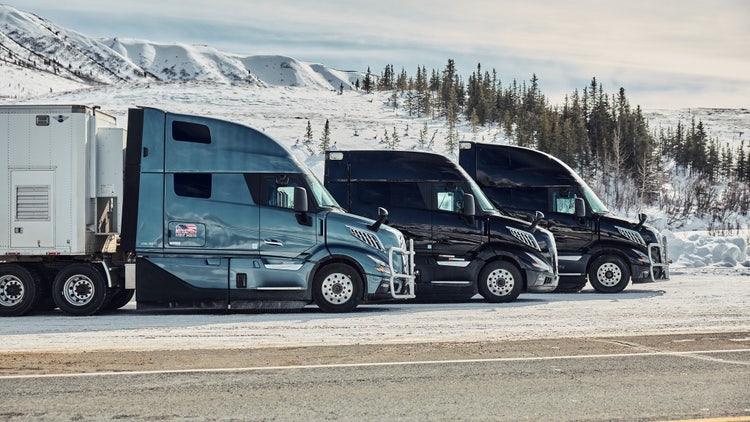
"Fairbanks is chosen as a test location for some obvious reasons, and some maybe not so obvious reasons. Obviously, it's cold, that's why we're here. But it's sustained cold".
The ultimate test of endurance
"You gotta be ready for anything," says Mike Jillson, a Volvo Trucks test truck driver who grew up in Alaska. With over two million miles under his belt and 45 years of experience, Jillson has seen it all. "Truck driving in Alaska is a little bit different. Just the other day, it was bare pavement, then a few miles down the road, I was on ice and snow. Hazards could be anything from another driver to moose crossing the road."
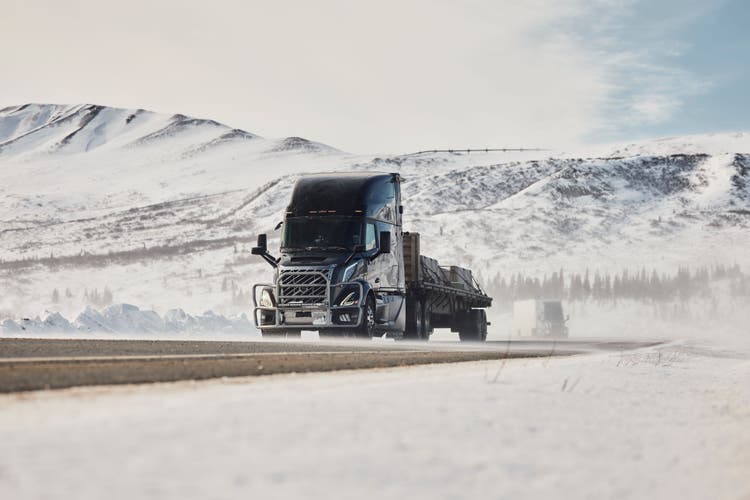
This unpredictability is precisely why Volvo chose Fairbanks as its cold weather testing headquarters. Here, the all-new VNL faces its toughest challenge yet: surviving and thriving in conditions that would take down lesser vehicles.

Beyond the lab: why real-world testing matters
Matthew Taylor, Group Manager for Reliability Test Engineering at Volvo Group North America, explains why these Arctic trials need to be replicated in a controlled environment.
"Volvo does a wonderful job of testing in labs and rigs to ensure product quality is paramount. However, not everything can be captured in the lab, and that's where the reliability tests are able to certify that every aspect of the vehicle is tested," Taylor says. "We are able to find issues that might not typically be found in some of our closed lab type tests."
Each testing season begins with driving the vehicles more than 3,000 miles from Colorado to Fairbanks. Once in Alaska the team spends the winter months conducting complete vehicle validation across a temperature range that would be impossible to achieve consistently in simulations. From powertrain performance to cab comfort, everything is scrutinized under the harshest conditions nature can provide.
Taylor happily acknowledges that the assignment is equal parts science and adventure, “We don’t just do it because it’s cool. We do it because our customers depend on us.”
The cold soak: when trucks chill out
One of the most critical procedures in the testing regimen is the "cold soak"—a process that Dan Stathis, Team Lead and Test Engineer, describes in detail.
"A cold soak is when we look at the weather forecast, and if we see a temperature range that meets our test requirements—typically anything below zero Fahrenheit—we will keep the truck outside. We shut the engine off, and it just sits there," explains Stathis. "We want to try to get everything in the truck, everything in the engine, down to the lowest temperatures we can possibly get."
After a 12-hour cold soak, often reaching temperatures of negative 20 or even negative 30 degrees, the engineers turn the key and expect the truck to start without assistance—no starting fluid, no special procedures. It's a pass/fail test that simulates what a real driver might face in the harshest winter conditions.
Alaska: The perfect testing ground
Why Alaska, specifically? Taylor explains that Fairbanks offers unique testing conditions not found elsewhere, especially in the lower 48.
"Fairbanks is chosen as a test location for some obvious reasons, and some maybe not so obvious reasons. Obviously, it's cold, that's why we're here. But it's sustained cold,"
Taylor says. "In Alaska, we're able to get cold temperatures not at altitude—a lot of this is really close to sea level. From a powertrain calibration perspective, that’s huge."
The team also benefits from dramatic temperature swings that can occur in a single day—from negative 40 in the morning to near zero by evening—providing data across various conditions without relocating the test fleet.
The routes: replicating real-world scenarios
The testing team’s driving is always purposeful. They follow specific routes designed to simulate real-world customer operations.
"We have some local routes for stop-and-go that we would call a 'Fairbanks city route,'" Taylor explains. "We also have some routes that are overnight that might go down to Anchorage, in which the driver could spend the night and evaluate the sleeper, then return the following day."
These routes expose the trucks to conditions that can reveal potential weaknesses in design or engineering that might not surface in less challenging environments.
When trucks talk back: the feedback loop
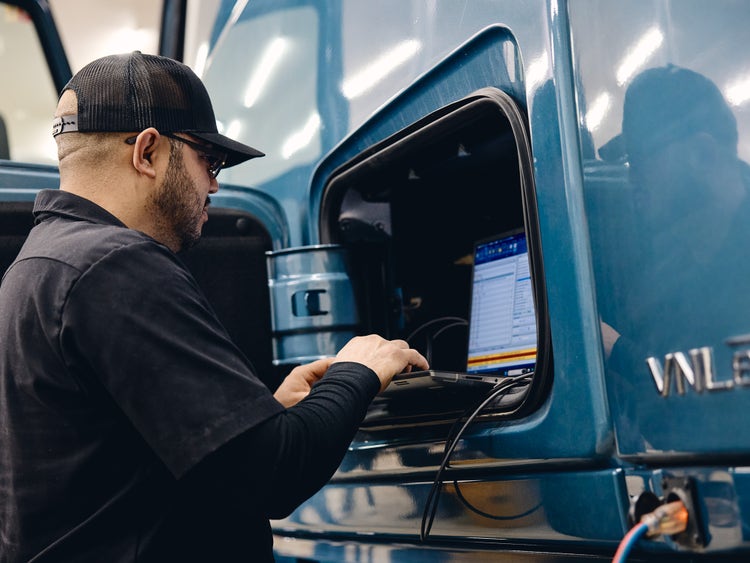
What truly sets Volvo's testing program apart is the direct feedback loop between drivers and engineers. Jillson describes the real-time reporting system: "We've got buttons here on the seats so we can record thoughts on what's happening with the trucks and then later see the performance data matched with those notes. We also fill out daily worksheets, grading everything from the seats to the sleeper to the steerability and motor handling."
The data recorded in Alaska is analyzed both onsite and by hundreds of team members back at home. This constant flow of information leads to continuous improvement—a core value at Volvo Trucks.
Quality and safety: the non-negotiables
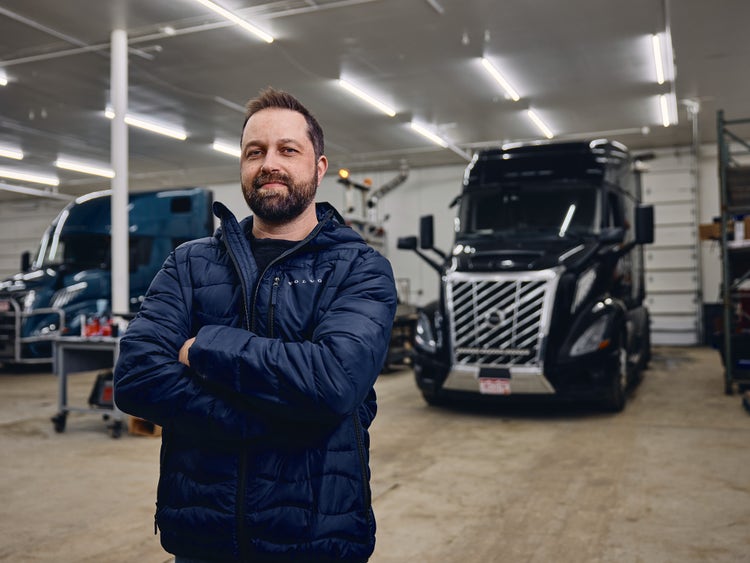
"I would say safety and quality are Volvo's number one priority," emphasizes Stathis. "When we see stuff in testing where we know there can be room for improvement, we work directly with engineering and give them our feedback."
This commitment to quality is particularly evident when testing a truck like the all-new VNL, which features extensive innovations.
"These trucks are lifelines—people's lives depend on them," Jillson points out. "People live in these trucks, so they need to be put through some pretty hard tests. Bringing them to Alaska and testing them in these conditions with the winds and the roads and the snow and the ice is definitely going to help save some lives in the long run."

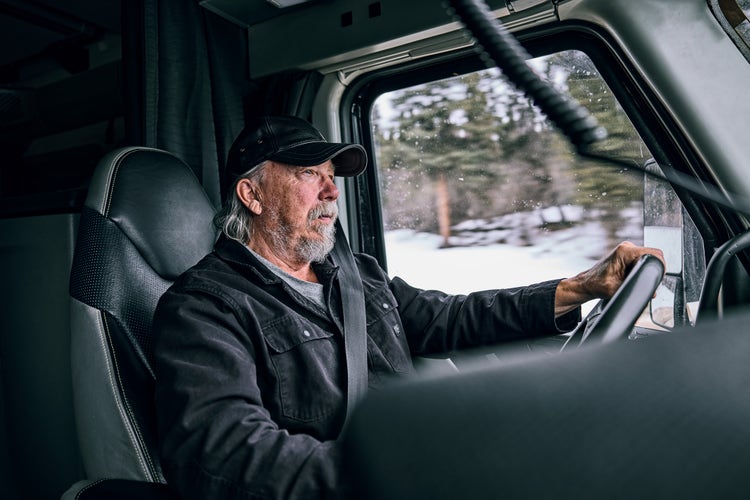
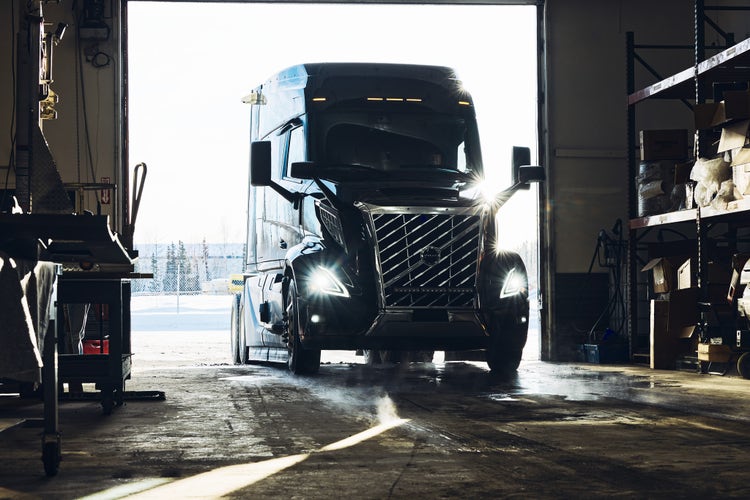
"Bringing these to Alaska and testing them in these conditions with the winds and the roads and the snow and the ice is definitely going to help save some lives in the long run."
The results: a truck you can trust
After three years of cold weather testing, the all-new VNL has shown remarkable improvement. "I think it’s performing really well" says Stathis. "From when we first started testing, there have been pretty drastic improvements."
Taylor agrees, "Testing these trucks in these extreme conditions is part of our vehicle validation effort for Volvo. It does improve the product, but it also instills confidence for our customers."
The message is clear: If a Volvo VNL can handle winter temperatures in Fairbanks with 70-mph wind gusts and whiteout conditions, it can handle whatever any route might throw at it.
The final mile
As Volvo's Cold Weather Testing program continues to push the all-new VNL to its limits, one thing becomes increasingly evident: this is a truck built not just to survive extreme conditions, but to conquer them.
Back in Fairbanks, as another day of testing wraps up, Mike Jillson navigates through a fresh snowfall, alert for moose and other hazards. He knows that somewhere out there, a driver's livelihood—maybe even their life—will depend on the work being done today. "You're out trucking at 40 below or lower," he says with the matter-of-factness of someone who's done this for decades, "and you kind of wonder how the truck can even make it up and down the road at those temperatures. But they do. They hold together."
And that, ultimately, is what Volvo's Cold Weather Test is all about: making sure that when you need your truck the most, in the harshest conditions imaginable, it doesn't just hold together—it outperforms.
As he shuts the door to the shop for the evening, Taylor adds, “These quality impressions from experienced drivers, matched with the real-time data from the trucks…it all equals testing that makes really important contributions to our future product development.”